At -21°C you're scraping your windscreen while your neighbour strolls off hands in his pockets
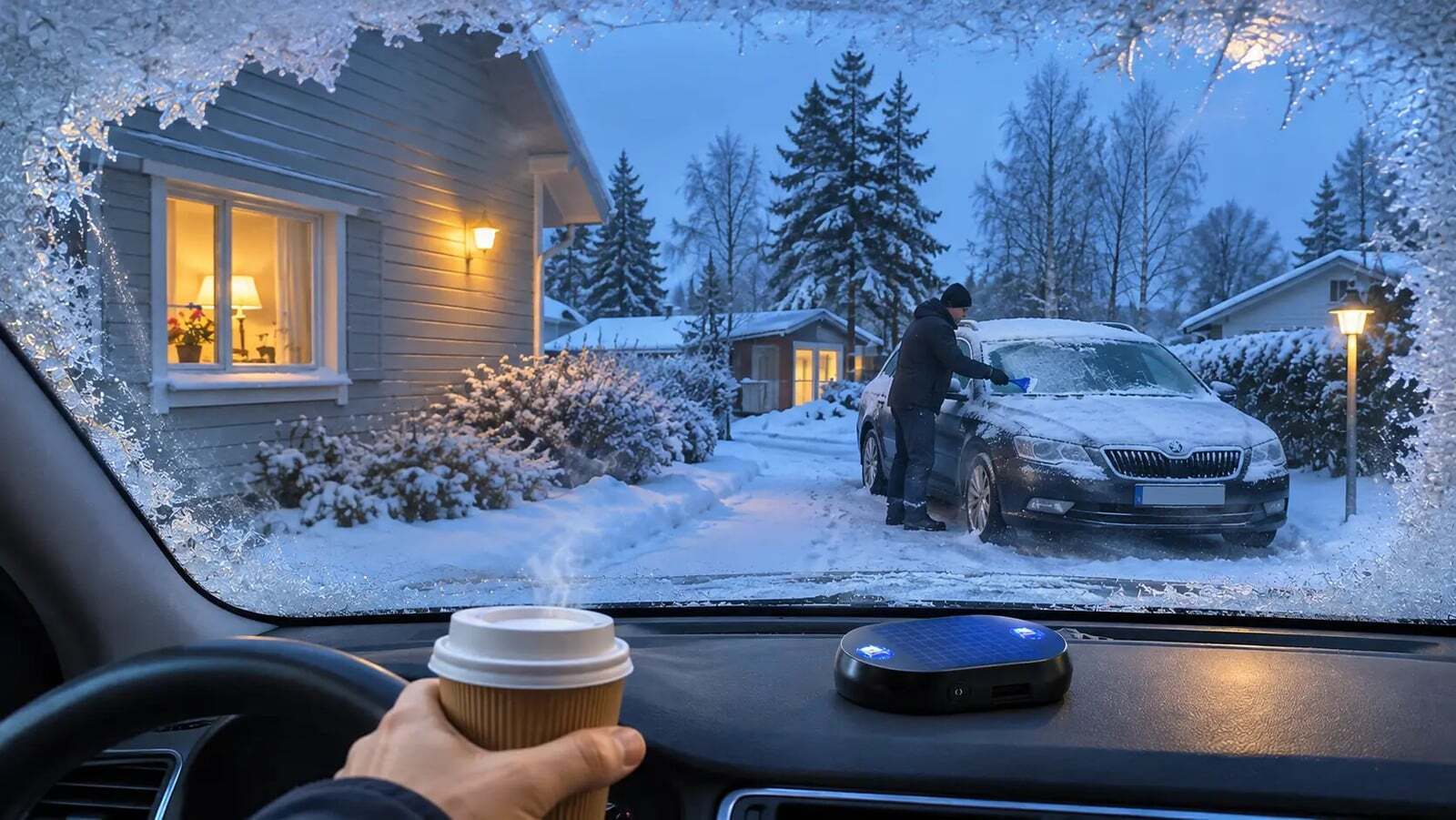
You've seen it. He walks out, gets in the car and drives off. No scraper, no gloves. His windscreen is perfectly clear.
You're still standing there, fingers frozen round a plastic handle. And the same question every single morning: how on earth does he do it?
Margaret Campbell wondered the same thing for 41 years.
It's 6:47am on a Tuesday in January
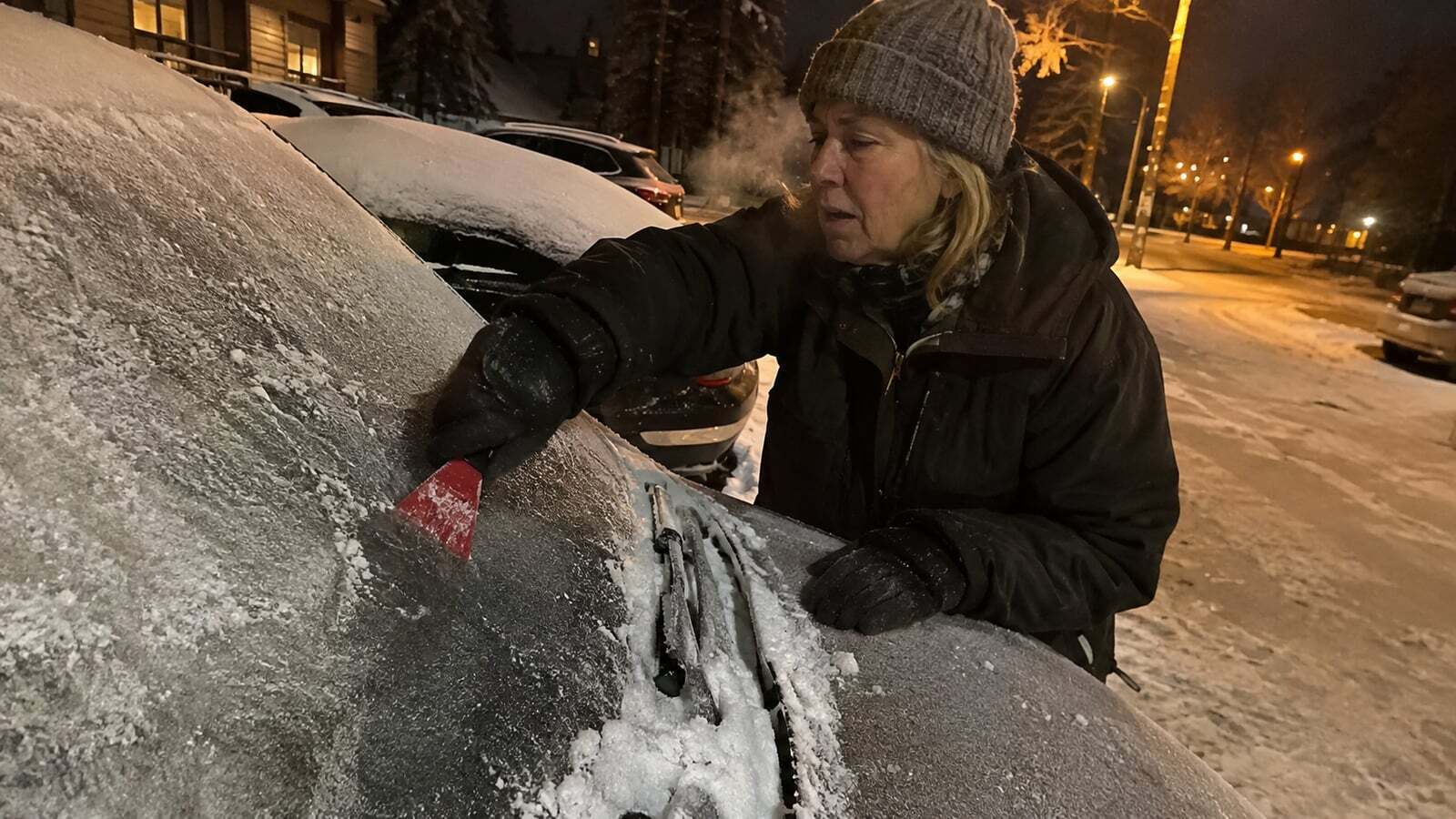
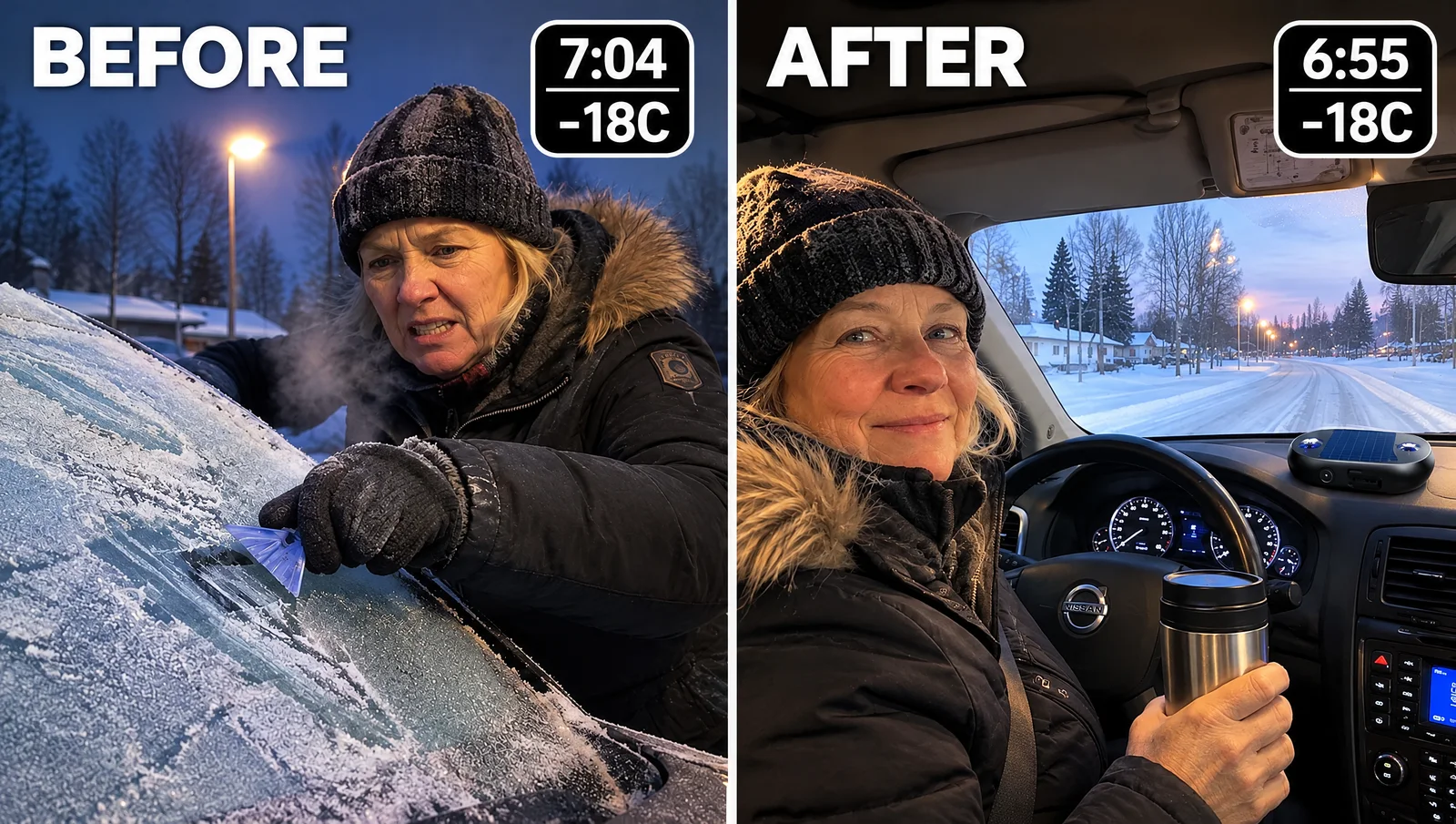
Margaret Campbell, 63, from Inverness, is standing on her drive at -18°C. Gloves on. Scraper in hand. She has done this every winter morning for 41 years.
The windscreen is frozen solid. Not a thin layer of frost. Thick, hard ice that has been building up since 10pm last night.
She starts scraping. Left to right. Top to bottom. The ice won't budge.
Her fingers go numb through her gloves in under two minutes. Her breath clouds in the air. She checks the time on her phone with a frozen hand.
7:04am. Late again.
What Margaret didn't know that morning: more than a thousand miles away, a Norwegian engineer had already solved her problem. He just hadn't told her yet.
What nobody tells you about the ice scraper
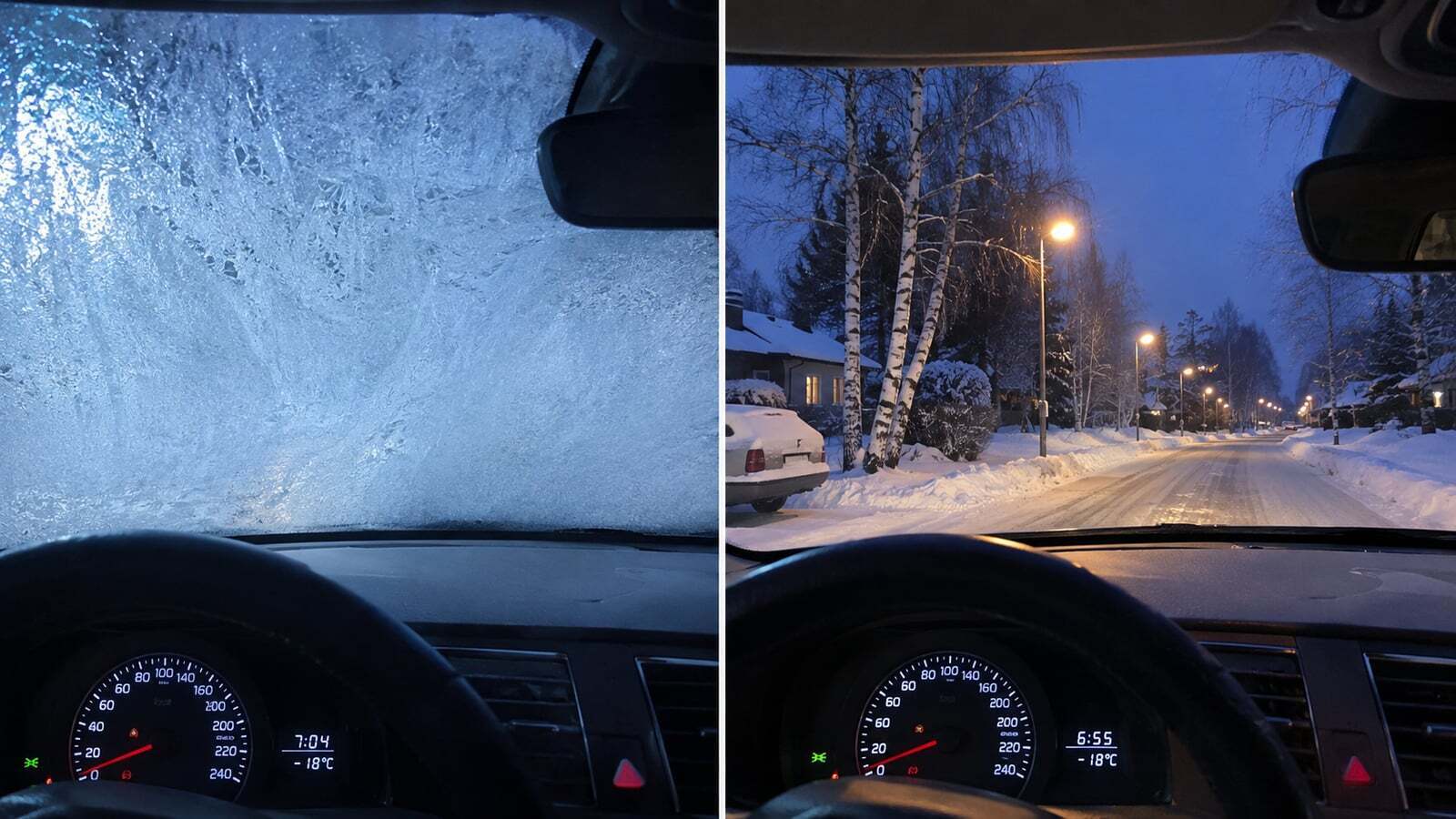
It isn't just a nuisance. It's dangerous.
Across the UK, thousands of drivers set off every winter with a badly cleared windscreen. Not fully clear. Just enough to see the road straight ahead.
Not the sides. Not the blind spots. Not the cyclist coming up on the right.
You're in a rush. It's freezing. Just get it done.
And there's something else nobody talks about.
The icy ground around the car. The patch that forms overnight right where you stand to scrape.
Margaret has slipped twice in ten years. The second time, she grabbed the wing mirror just in time.
Then there's the windscreen itself.
Replacing a windscreen in the UK costs somewhere between £250 and £500, depending on the car. The tiny scratches from the scraper build up winter after winter. At night they catch the glare of oncoming headlights. They weaken the glass.
And one fine morning, a small stone is all it takes.
41 years of scraping. 41 winters. Hundreds of mornings stolen before the day has even begun.
Margaret was one of the 2.8 million British drivers who go through exactly the same thing every morning from November to April. And not one of them had ever had a real alternative.
Why nobody had solved this before
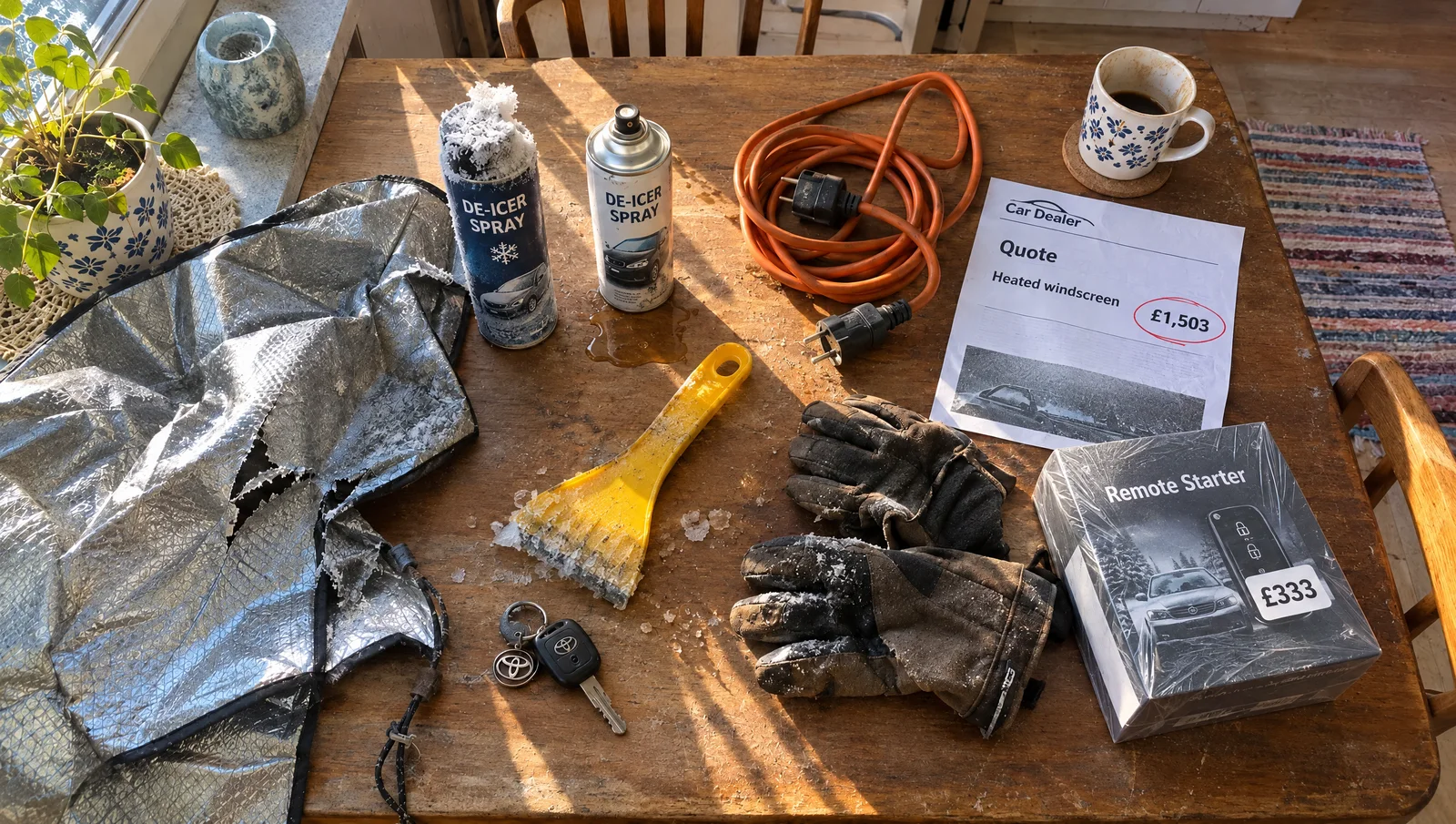
There are solutions out there. That's what you've been told for years.
De-icer sprays. Windscreen covers. Engine pre-heaters, the kind plenty of Highland drivers swear by. Heated windscreens at £1,500. Remote starters that cost £330 to fit.
So why was Margaret still standing there at 6:47am with a scraper in her hand?
Because none of them actually solves the problem.
De-icer spray works down to about -10°C. Any colder and it freezes before it can do its job. And it leaves an oily film on the glass that smears your view at night.
A windscreen cover? It works right up until the wind rips it off at 3am. Or until you forget to put it on the night before.
An engine pre-heater warms the engine. Not the glass. Not the side windows. Not the rear window.
A heated windscreen can't be fitted to a car that didn't come with one. And for the 94 per cent of British drivers whose car doesn't have it as standard, the only option is to change the car.
Nobody in the motor industry has ever seriously tried to fix this. Because an ice scraper costs £2.50. And as long as people keep buying them, there's no reason to look for anything better.
That's exactly what Erik Halvorsen realised on the day everything changed.
The engineer from Tromsø who'd had enough
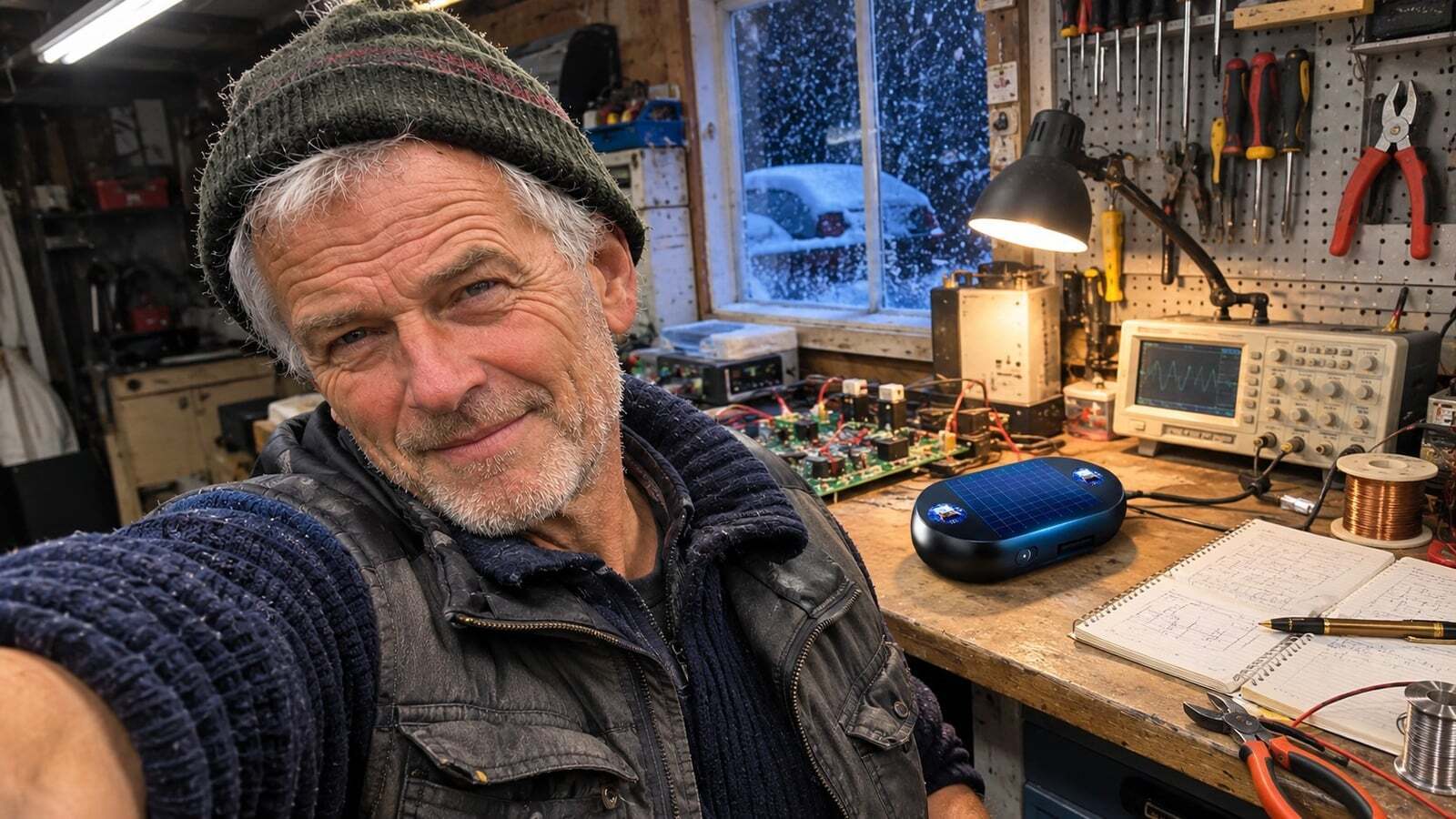
Erik Halvorsen is not a man who complains.
This 58-year-old materials engineer from Tromsø has spent 27 years on one very specific problem: how metal structures and glass surfaces react to the extreme temperature swings of the Arctic.
Oil rigs. Bridges. Structures in northern Norway exposed to brutal, bone-cracking frost.
His job was to understand how frost attacks materials. And above all, how to fight it without destroying them.
One February morning in 2021, Erik steps out of his house in Tromsø at -23°C. He has a flight to catch. His windscreen is covered in 2 centimetres of ice.
He scrapes. Like everyone else. Like he's done for 30 years.
And halfway through, he stops.
He misses his flight that morning. But when he gets home, he opens a new notebook. And at the top of the first page he writes a single sentence:
The breakthrough
Erik spends the next few months in his garage in Tromsø. Not inventing anything new. Just shrinking what he already knew.
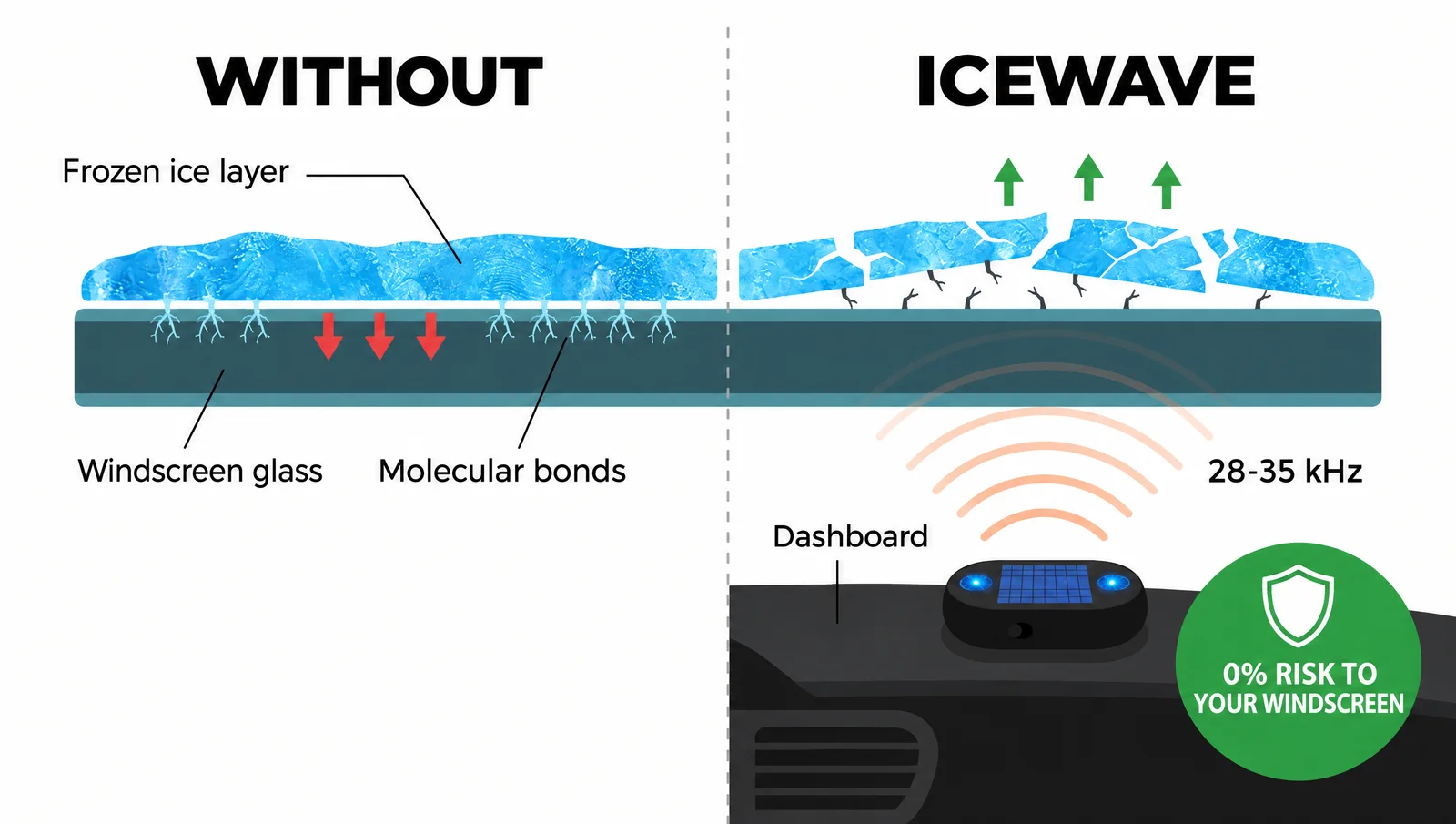
For 27 years he had studied how frost clings to the steel cables of Arctic bridges. Not on the surface. Deep down, at molecular level.
Every ice crystal forms thousands of invisible micro-anchors into the material underneath. That's what makes frost so hard to shift. It isn't glued on. It's attached, point by point, like a microscopic strip of Velcro.
And every anchor has a weak spot.
Think of a crystal wine glass. Run your finger lightly round the rim and nothing happens. But find the right frequency and the glass starts to sing.
The vibration doesn't come from outside. It builds inside the material itself. The molecules start moving together, harder and harder, until the structure gives way from within.
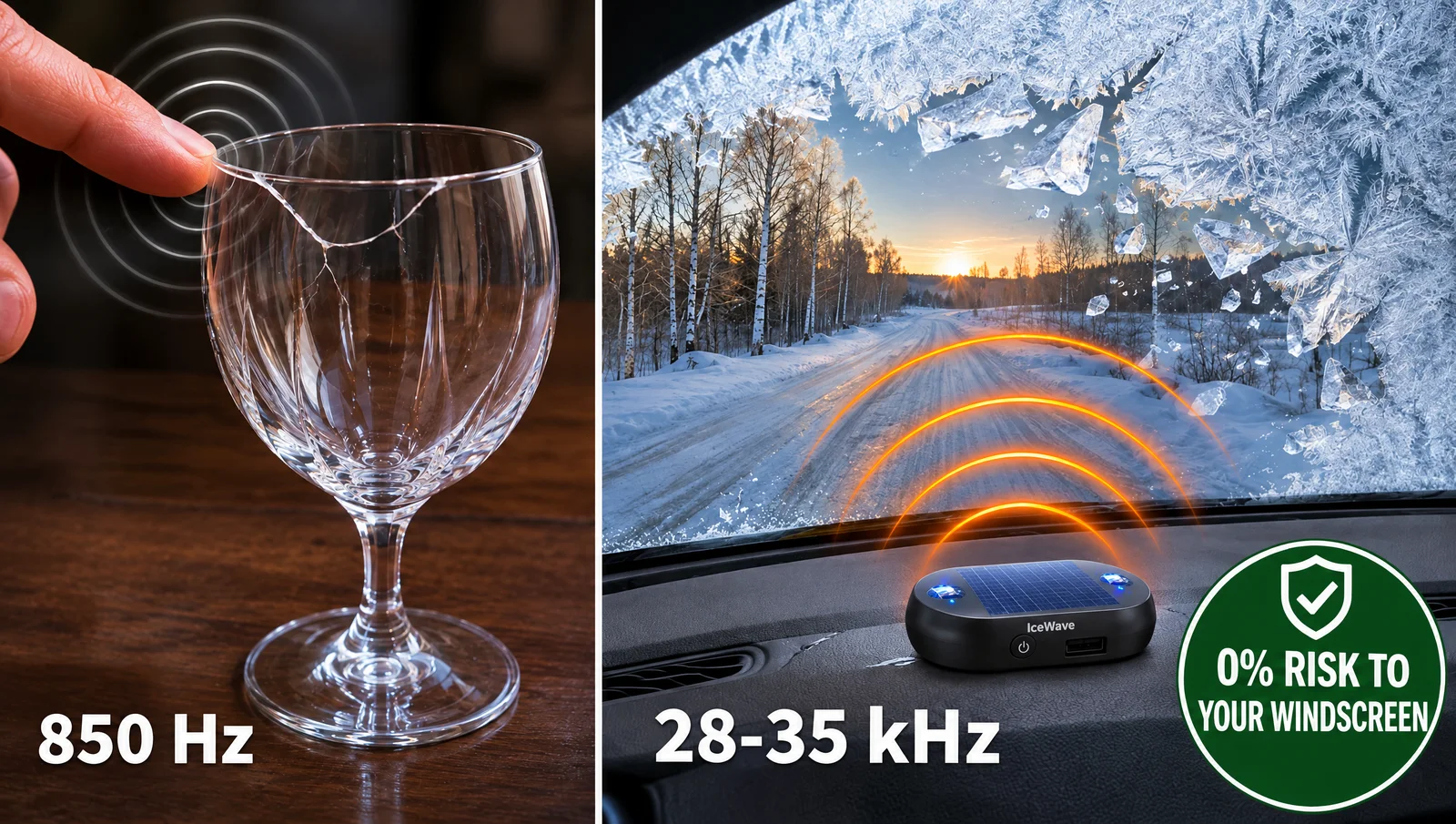
The ice on your windscreen works in exactly the same way.
It doesn't stick to the glass by chance. It holds on through a precise molecular bond between the ice crystals and the surface of the glass. And that bond, like every physical bond, has a frequency at which it breaks.
On Arctic bridges, Erik used 200 kg vibration generators to stop frost building up on the cables. The principle had been proven years ago. The problem was that nobody had ever thought of applying it to a car.
And why would they? For BMW, Toyota or Volkswagen, a frozen windscreen affects less than one per cent of a car's yearly use. No manufacturer is going to pour millions into a seasonal problem.
Especially when a £2.50 plastic scraper is sitting in every petrol station.
But for the 2.8 million Britons who park outside, it isn't "a few weeks". It's six months. Every morning. Without fail.
Erik knew the exact frequency. On bridge cables, the ice-to-steel bond breaks at around 40 kHz, an ultrasonic vibration well beyond the range of human hearing.
On car glass, his lab tests showed the effective range sits between 28 and 35 kHz, depending on the thickness and curve of the windscreen.
From a 200 kg industrial generator to a 180 g device that fits in the palm of your hand. It took 14 months and three prototypes.
The power is a thousandth of the original. But that's enough: the aim isn't to smash the ice. It's to stop ice crystals anchoring to the glass overnight. A constant, invisible, silent vibration that keeps the surface of your windscreen hostile to frost.
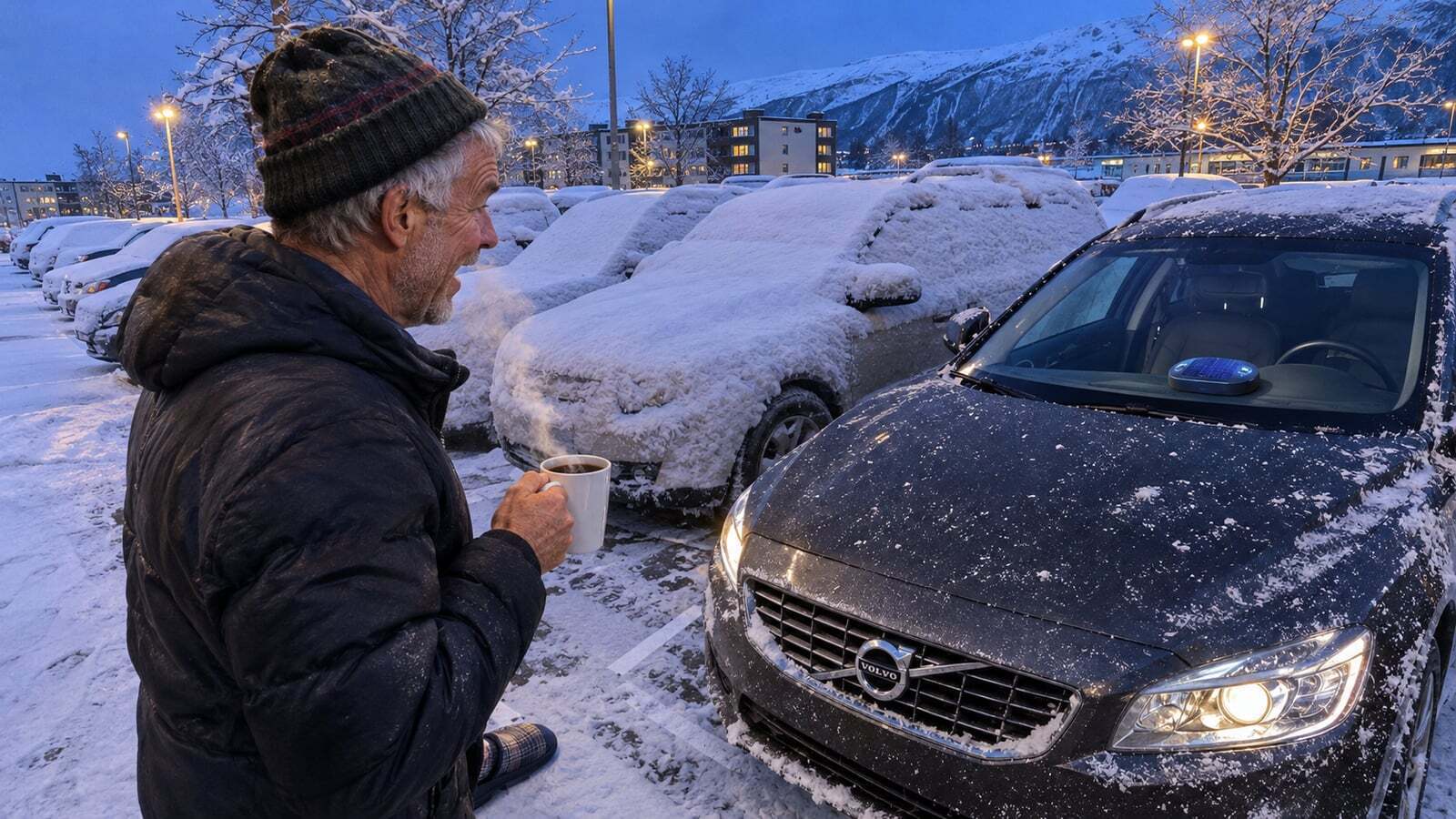
The third prototype goes on the dashboard of a Volvo parked outside at -19°C. Erik switches it on at 10pm before bed.
At 7am the next morning he steps outside, coffee in hand. The windscreen is clear. There's a little frost round the edges, but it no longer grips. It falls away on its own when he rests his hand on it.
What happened when the first British drivers tried it
In the winter of 2023, Erik gets in touch with 47 drivers in Norway and Scotland.
Not engineers. Not professional testers. Ordinary people with an ordinary car parked outside. Nurses whose shift starts at 6am. Pensioners. Tradespeople loading their vans before sunrise.
He gives each of them a device. Asks them to use it for 8 weeks. And to write down what happens.
The results come in March.
43 out of 47 participants stopped using their ice scraper before the end of the second week. Not because anyone asked them to. Because they simply didn't need it any more.
Check availability and discount here >>Fast UK delivery • Secure payment • 90-day satisfaction guarantee
Who it's made for
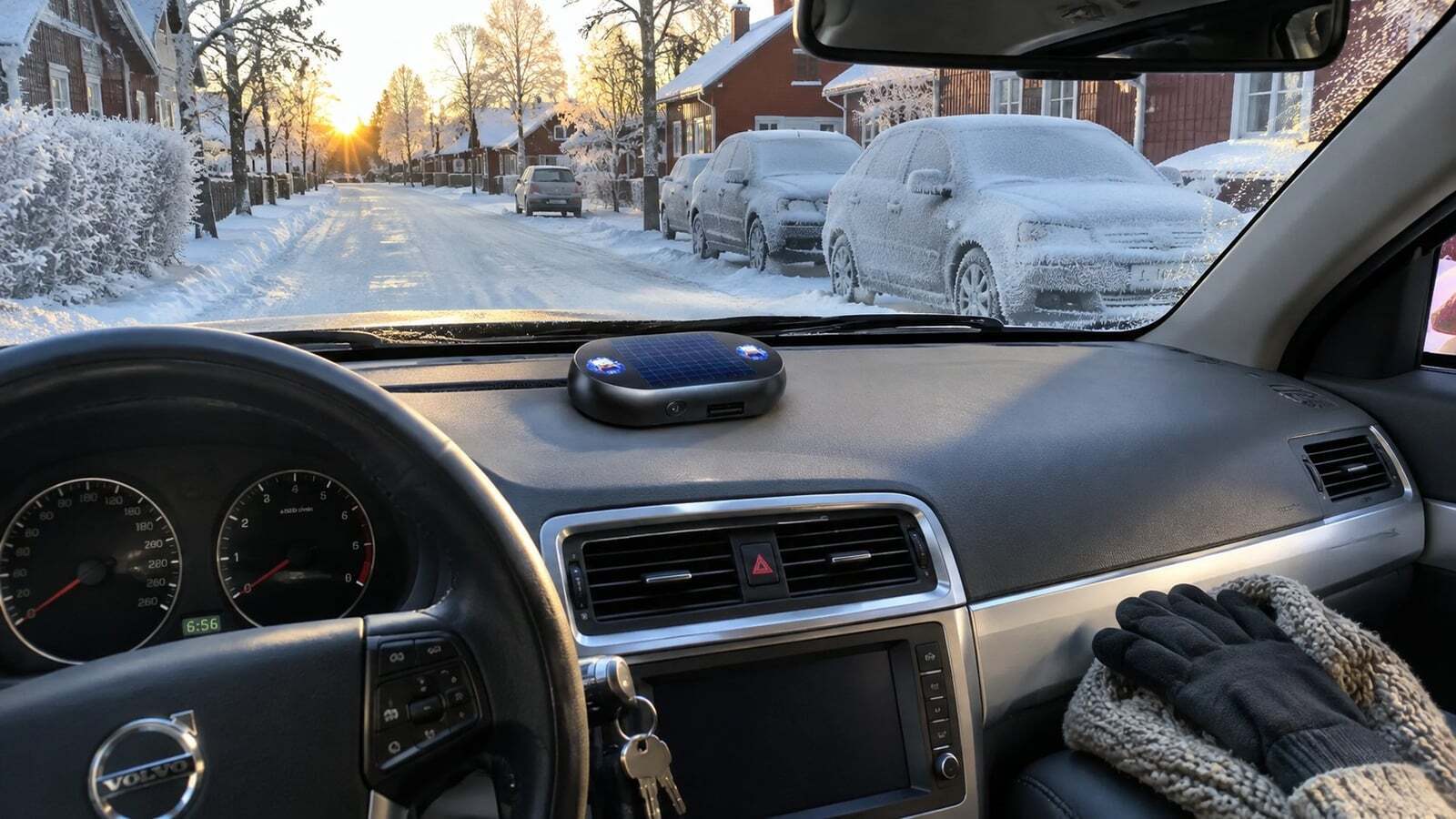
It's made for Margaret, 63, who leaves for work at 7am and can't afford to lose ten minutes with a scraper at -18°C.
It's made for Pat, 71, whose arthritic hands make scraping harder every winter. Who puts off her plans on the coldest mornings, because just the thought of defrosting the car wears her down before she's even opened the door.
It's made for parents doing the school run at 8am with not a minute to spare.
And it's made for anyone who has ever thought, even once: there has to be something better than this.
Now there is.
Check whether IceShield Auto is still in stock >>Fast UK delivery • Secure payment • 90-day satisfaction guarantee
Your questions, straight answers
Does it really work at -20°C?
That's exactly why Erik developed IceShield Auto in Tromsø and not in Barcelona. The prototypes were tested in genuine northern conditions, down to -25°C. The lab was a real Arctic winter, not a cold room in the middle of Europe.
Does it use a lot of power?
No. IceShield Auto runs on a battery. It doesn't plug into the mains and it takes nothing from your car battery. One battery lasts the whole winter.
Will it damage the glass?
Quite the opposite of a scraper. IceShield Auto never touches the glass. No rubbing, no heat, no chemicals. The vibration travels through the air, not across the surface. Your windscreen stays in one piece.
Does it work on the side and rear windows?
IceShield Auto works on all the glass in your car, spreading out from the dashboard. Results are best on the windscreen and clearly noticeable on the other windows, depending on the size of the car.
How quickly will I notice a difference?
Usually on the very first night. Some users report a partial result on the first night and the full effect on the second, depending on the humidity.
Does it replace the ice scraper completely?
In 9 cases out of 10, yes. In extreme conditions or after heavy snow, a quick 30-second wipe is enough to clear what's left. Not 10 minutes of scraping. 30 seconds.
Check availability before this batch sells out >>Fast UK delivery • Secure payment • 90-day satisfaction guarantee
What British customers are saying
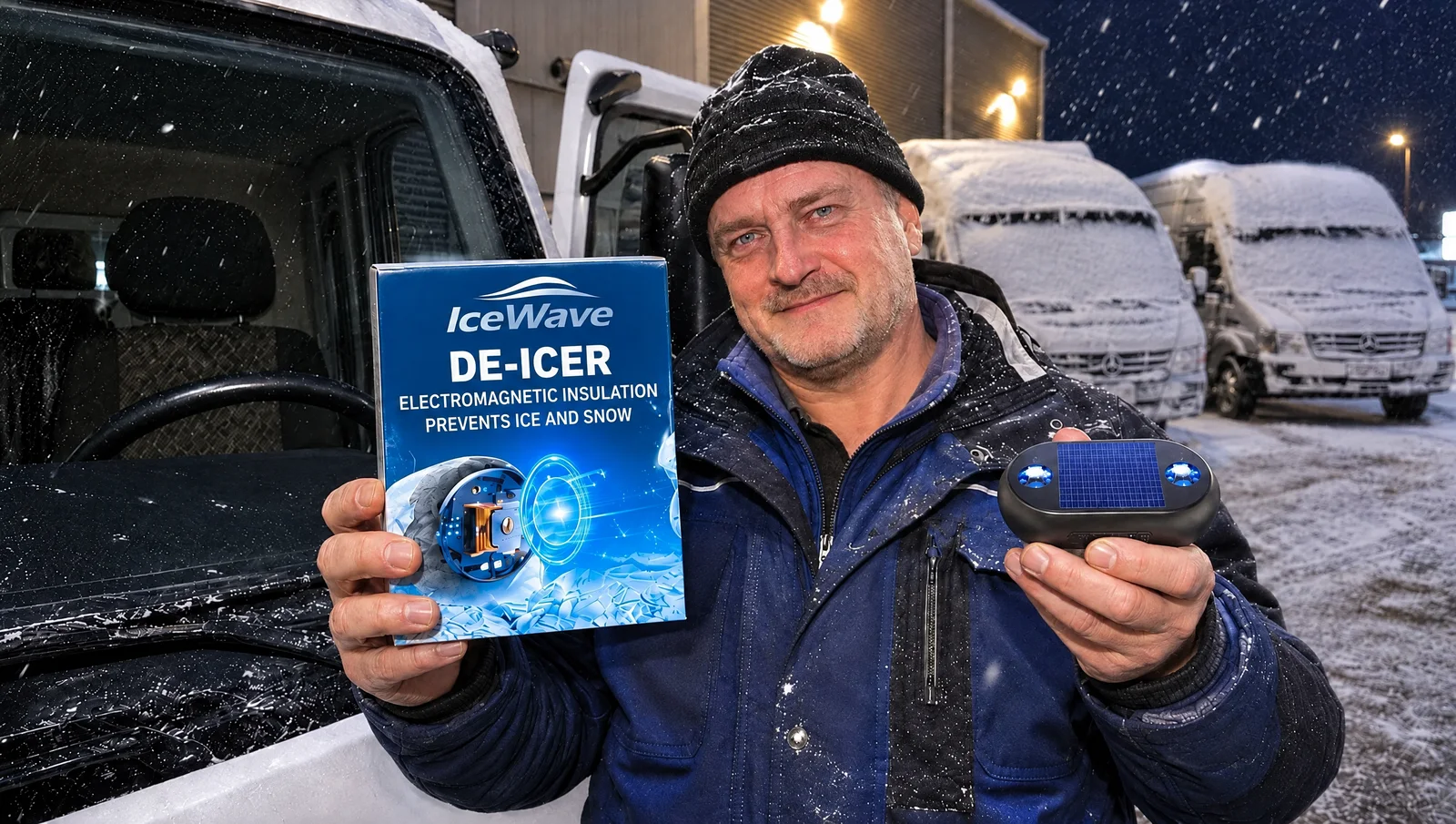

"Last winter I nearly went flying while scraping the windscreen. The ground was pure ice under my feet and I hadn't even noticed. Thanks to IceShield Auto I don't have to get out of the car before I set off any more. I bought peace of mind, not a gadget."

"My hands have been painful every winter for years. Scraping had become a real ordeal every morning. Since IceShield Auto, I just get in and go. I never thought something this simple could change the start of my day so much."
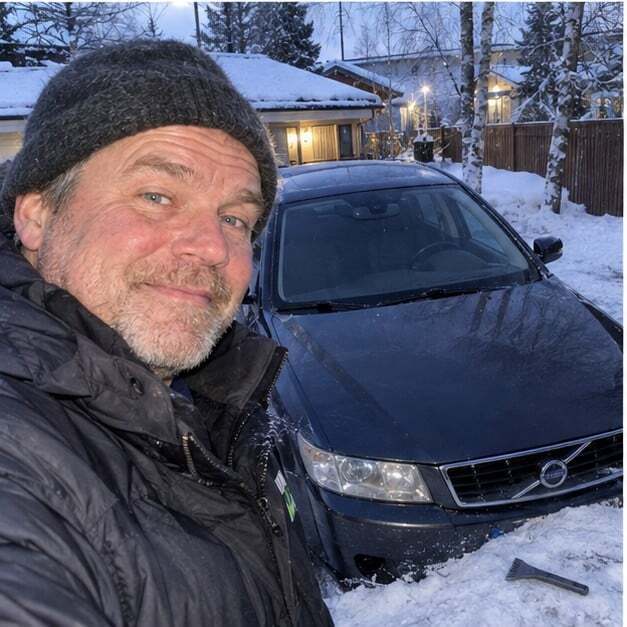
"My wife gave me IceShield Auto for my birthday in October. I was polite about it but, honestly, I wasn't convinced. On the first frosty morning in November there was nothing on the windscreen. I texted her from the car park to apologise for doubting her."
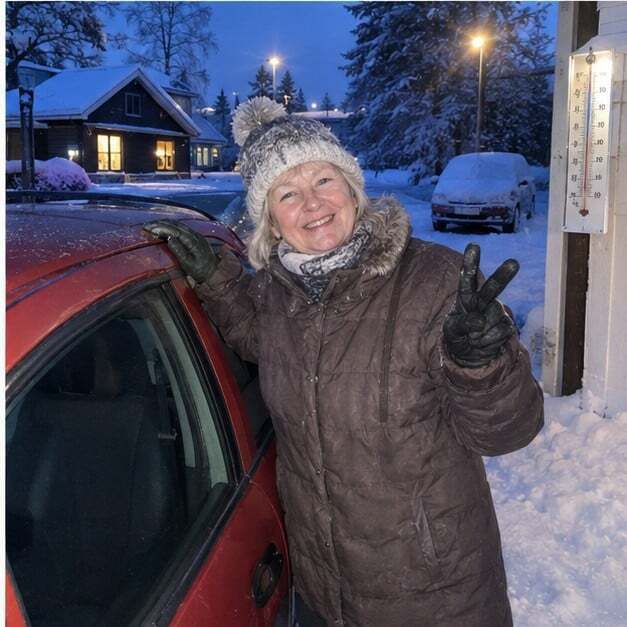
"In Braemar we know what winter is. I've tried every spray, every cover, everything you can find at the petrol station. Nothing has ever really worked. IceShield Auto is the first thing in 50 years that lets me get in the car in the morning without dreading what's waiting outside."
"I leave for work at 5:45am. In January it's pitch black and -15°C. Before IceShield Auto I'd easily lose 15 minutes every morning. Now I spend that time on a quiet cuppa before I head off. A small thing to some people. A huge difference to me."
Fast UK delivery • Secure payment • 90-day satisfaction guarantee
Why it pays to act now
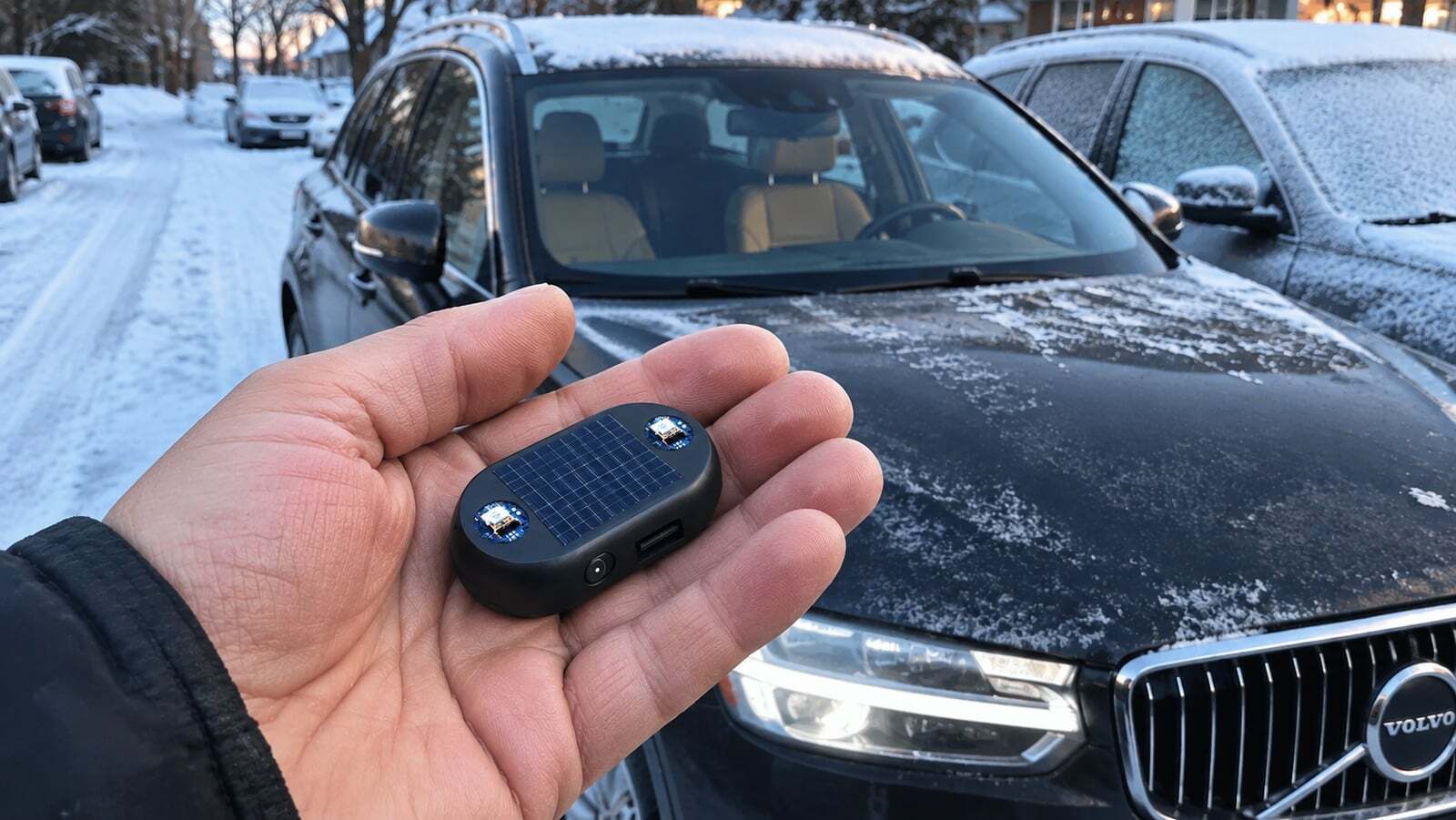
Since IceShield Auto launched in Scandinavia, demand has outstripped every forecast.
Erik Halvorsen didn't build a multinational. He runs a small production team in Norway, and stock is limited every season. Winter comes round fast. And this year, orders started pouring in back in September.
Right now, readers of this article get a 70% launch discount.
This isn't a permanent offer. It's reserved for the first orders of the season, before stock runs out. Last year IceShield Auto had sold out by mid-December. Orders placed after that weren't delivered until spring.
A British winter without an ice scraper. Without frozen hands. Without running late. Without an icy drive under your feet at 7am. For the price of dinner for two.
Margaret Campbell ordered IceShield Auto one Friday evening in October. The following Monday morning she was sitting in her car with a hot coffee in hand, ready to go.
Erik Halvorsen wonders the same thing.
⚠ Stock is likely to run out before mid-December